How to Tell If Your Roof Has Hail Damage
North Texas sees more hail than almost anywhere in the country, and most of it falls between March and June. The tricky part is that hail damage rarely looks dramatic from the street. A roof can take a beating and still look fine from the driveway, then start leaking months later. Here is how to tell whether your roof may have been hit, and what to do next.
Start With What You Can See From the Ground
You do not need to climb on the roof to find the first clues. After a storm, walk around the house and look for:
- Dents in soft metal. Gutters, downspouts, roof vents, and the metal caps on chimneys and pipes dent easily. If they show round dings, the shingles took hits too.
- Granules at the downspouts. Asphalt shingles are coated with small granules. Hail knocks them loose, and they wash out of the downspouts in little piles that look like coarse sand.
- Damage to other things outside. Dented mailboxes, cars, AC unit fins, torn window screens, and spatter marks on fences or siding all show how big the hail was and which direction it came from.
- Shingle pieces in the yard. Wind that comes with a hailstorm can tear off tabs or ridge caps.
Please leave the roof itself to a professional. Wet shingles, steep pitches, and two-story drops are how homeowners get hurt after storms.
What Hail Damage Looks Like on Shingles
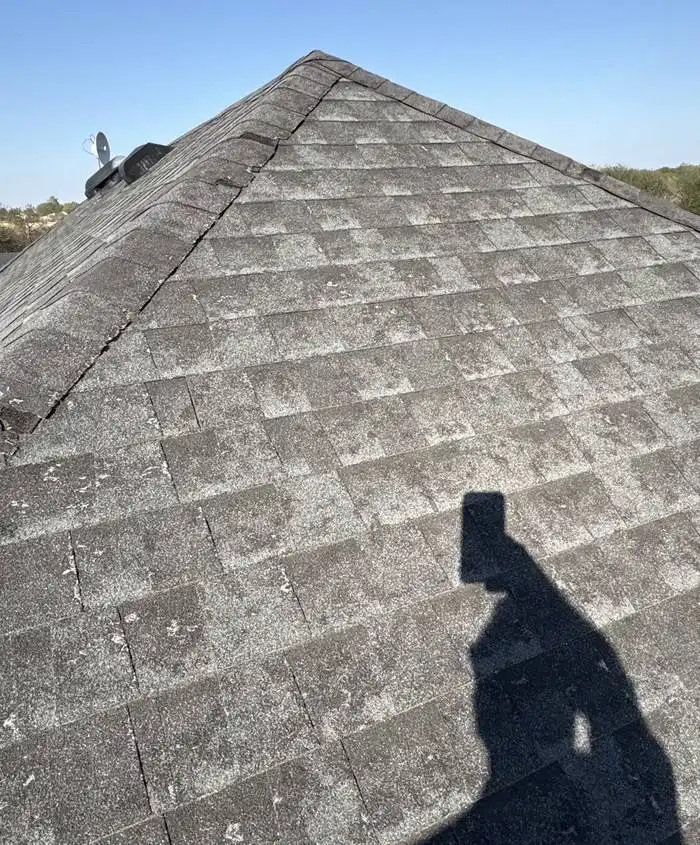
Up close, hail damage on asphalt shingles usually shows up as dark, round spots where the granules have been knocked off. Pressing on a fresh hit often feels soft, like a bruise, because the mat underneath has been fractured. Larger hail can crack shingles outright or break off corners. The damage is usually scattered across the roof in a random pattern, with more hits on the slopes that faced the storm.
Normal wear looks different. Aging shingles lose granules evenly, curl at the edges, or crack in straight lines from heat. Blistering from poor attic ventilation can look like hail at first glance, which is one reason an inspection by someone who sees both every week matters.
Why Small Damage Still Matters
A bruised shingle may not leak today. Once the mat is cracked, though, water and sun work on that spot, and it can open up over the next few seasons. Hail can also break the seal strips that hold shingles down, leaving them loose for the next windstorm. And most insurance policies have a time limit for reporting storm damage, so it is worth finding out sooner rather than later. Check your own policy for the exact window.
What Happens During a Free Inspection
When we inspect a roof after a storm, we check every slope, the ridges, the valleys, and all the soft metal. We mark and photograph what we find, look in the attic for signs of water, and check gutters, screens, and fences on the way down. You get the photos and a clear answer: no damage, a repair, or a roof that needs replacing.
If there is damage and you decide to file a claim, we document it and meet your adjuster on site to walk the roof together. The insurance company decides what your policy covers. Our job is to make sure the damage is clearly documented. Learn more about our storm and hail damage inspections.
If Your Roof Needs Replacing
If the damage is spread across the roof, a full replacement usually makes more sense than patching. Many homeowners in the area step up to Class 4 impact-resistant shingles at that point, since they are built to stand up to much larger hail. Most of our roof replacements are finished in one day, and every roof we install carries a lifetime workmanship warranty.
Call (682) 400-6163 to schedule a free roof inspection anywhere in Dallas–Fort Worth.