Commercial Roofing Contractor in Dallas–Fort Worth, TX
Commercial roofing is a different job from roofing a house. A church, a restaurant or a warehouse usually has a big flat or low-slope roof, rooftop units, drains and parapet walls, and a business or congregation underneath that cannot stop for a week. Different Roofing is a commercial roofing contractor based in The Colony, and our crews install, repair and coat commercial roofs across Dallas, Fort Worth, Arlington and the rest of North Texas. Inspections are free, we answer the phone 24 hours a day for active leaks, and se habla español.
Call (682) 400-6163 Text usText (682) 400-6163
A Commercial Roofing Company for Dallas, Fort Worth and Arlington
If you searched for commercial roofing near me, you probably have one of three problems: a leak that keeps coming back, a roof that took a beating in the last hailstorm, or a roof that is simply old and needs a plan. Our commercial roofing company can help with all three. We work for building owners, property managers, pastors and church facility teams, restaurant owners and general contractors. For commercial roofing in Dallas, Plano, Frisco and the northern suburbs, we are usually on site within a day. For commercial roofing in Fort Worth, Arlington and the rest of Tarrant County, we schedule inspections the same way and bring the same crews.
Commercial Roof Systems We Install
There is no single best commercial roof. The right system depends on the slope of the roof, how much foot traffic it gets, what is coming out of the rooftop equipment, how long you plan to own the building, and the budget. We install all of the common low-slope and metal systems used in North Texas:
- TPO roofing. A white, heat-welded single-ply membrane and the most common choice for new flat roofs on offices, retail and churches. Typical life: about 20 to 30 years with maintenance.
- PVC roofing. A heat-welded single-ply membrane like TPO, but more resistant to grease, oils and chemicals, which makes it the usual pick over restaurant kitchens. Typical life: about 20 to 30 years.
- EPDM roofing. A black rubber membrane joined with adhesive and seam tape. It stays flexible for decades and is still on many older DFW buildings. Typical life: about 25 to 30 years.
- Modified bitumen. Asphalt-based rolls reinforced with polyester or fiberglass, installed in two or more plies. Tough under foot traffic. Typical life: about 15 to 25 years.
- Built-up roofing (BUR). Layers of asphalt and roofing felt, often topped with gravel. Very durable and common on older commercial buildings. Typical life: about 20 to 30 years.
- Silicone and acrylic roof coatings. A fluid-applied membrane rolled or sprayed over a sound existing roof to add years of life without a tear-off.
- R-panel, PBR panel and corrugated metal. Exposed-fastener metal panels for warehouses, shops and metal buildings, plus metal roof restoration and retrofit.
- Standing seam metal. Concealed-fastener panels for steeper commercial roofs, canopies and architectural sections.
Not sure what is on your roof now? That is one of the first things we write down during the inspection, along with how many layers are already up there.
How a Commercial Flat Roof Is Installed
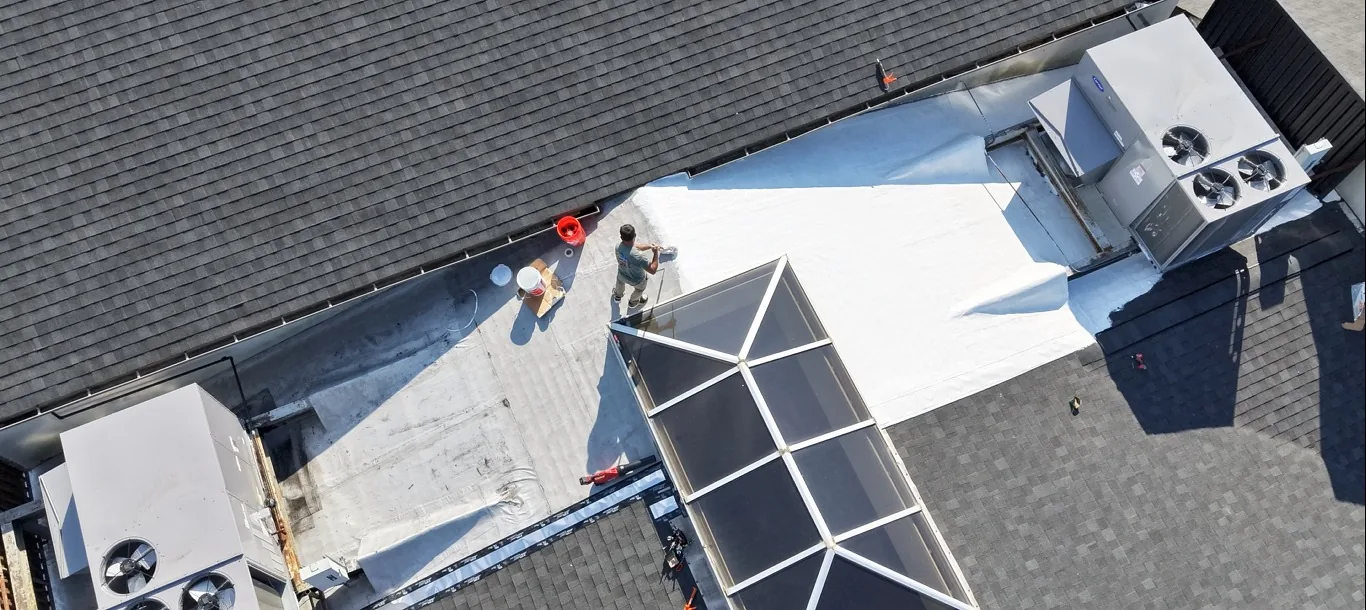
Most low-slope roofs go on in the same basic order, whatever membrane goes on top. First we decide whether the old roof has to come off or whether a recover is possible, which depends on how many layers are already there and whether the insulation is dry. Then the deck is checked and repaired, new insulation goes down (often tapered insulation to push water toward the drains), and a cover board is added where the system calls for it. The membrane is installed next: welded, adhered or fastened depending on the system. The details are where commercial roofs succeed or fail, so the crew spends real time on the flashings at walls, curbs, pipes, drains and scuppers, and finishes with new edge metal and coping. Rooftop walkway pads go down along the paths that service techs use.
Commercial Roofing Services
- Commercial roof replacement. Full tear-off or recover, new insulation, membrane, flashings and edge metal.
- Commercial roof repair. Open seams, punctures, blisters, failed flashing and damaged edge metal on every system we install.
- Leak repair. We trace the water back to where it actually enters, which is often 20 or 30 feet from the stain on the ceiling tile.
- Commercial roof inspections. A written report with photos of the field of the roof, the flashings, drains and rooftop equipment.
- Maintenance plans. Scheduled visits to clear drains, check seams and flashings and catch small problems before they become leaks.
- Commercial gutters. Box gutters, large downspouts and scuppers sized for a big roof. See gutter installation and repair.
Commercial Roof Pros and Cons at a Glance
- Single-ply (TPO, PVC, EPDM): light, fast to install and reflective in white; seams and flashings need careful workmanship, and the membrane can be punctured by dropped tools or debris.
- Asphalt systems (modified bitumen, BUR): thick and forgiving under foot traffic; heavier, and dark surfaces absorb more heat unless they get a reflective cap sheet or coating.
- Exposed-fastener metal: long-lasting and strong in wind; thousands of fasteners and washers need periodic attention.
- Coatings: lower cost than replacement and no tear-off; only work over a roof that is still basically sound and dry.
Repair, Replace or Coat?
Most of the commercial roofs we look at do not need a full replacement yet. Repair makes sense when the problems are isolated: a few open seams, a punctured area near a rooftop unit, flashing pulled away from a wall. A coating makes sense when the membrane is aging across the whole roof but the insulation underneath is still dry and the deck is solid. Replacement is the better investment when leaks keep coming back in different places, the membrane is brittle or shrinking everywhere, or core samples show wet insulation across a large share of the roof. We cut small test cores when we need to know what is under the membrane, and we show you the photos before we recommend anything.
Signs Your Commercial Roof Needs Attention
- Water stains on ceiling tiles, especially after a rain with wind behind it
- Water standing on the roof two days or more after it stops raining
- Seams that are lifting, blisters or bubbles in the membrane, or cracked and alligatored surfaces
- Flashing pulling away from parapet walls, curbs or skylights
- Rust at panel laps and fasteners on a metal roof
- Higher cooling bills, which can point to wet insulation
- Clogged drains or scuppers and staining on the walls below them
Church Roofing
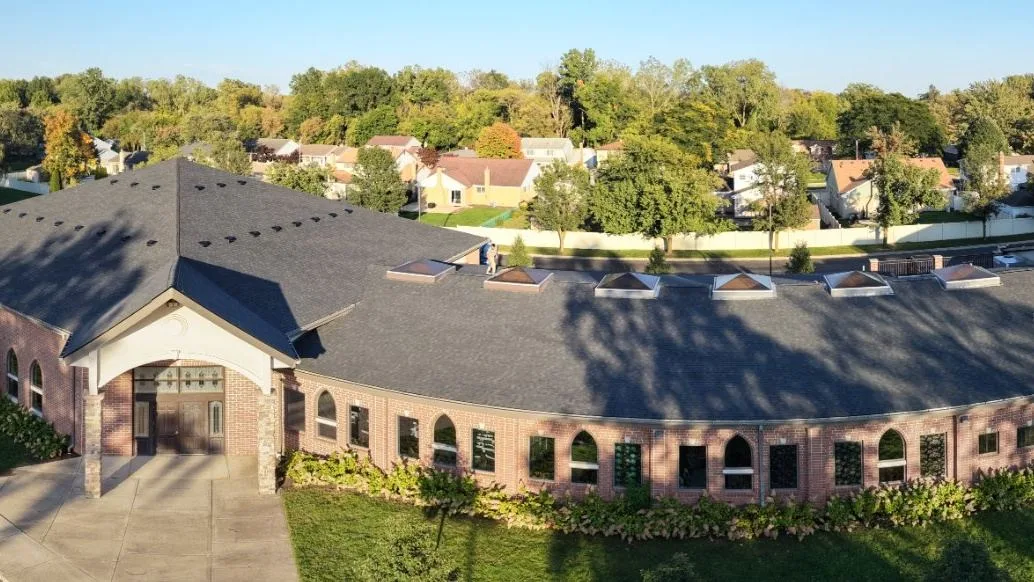
Church roofs are some of the most complicated roofs in any city. Many have a large low-slope roof over the fellowship hall, classrooms or gym, and steep-slope sections over the sanctuary, the entry and the steeple, all on one building. We install and repair both: membrane or coating on the low-slope areas and shingles or metal on the steep sections, with the transitions between them flashed so water cannot get in where the two roofs meet. Our commercial work includes a 36,000-square-foot Class 4 impact-resistant church roof in Michigan.
Scheduling is where church roofing is different. We plan the work around worship services, weddings, funerals, VBS and school days, keep crews and equipment off the roof during services, and clean the parking lot and walkways each day so the building is ready for whoever walks in next. We meet with your facilities team or pastor before the work starts to go over the calendar, where the dumpster and material deliveries will go, and who to call each day.
Can you replace a church roof without canceling services?
Yes. We schedule loud work and material deliveries for weekdays, stop work before services and events, and leave the site clean and safe each evening. Most churches keep their normal service schedule the whole time.
Can you handle a church with both flat and steep roof sections?
Yes. Most churches we see have both. We install low-slope systems such as TPO or coatings on the flat areas and shingles or metal on the steep areas, and we flash the transitions between them carefully because that is where many church leaks start.
Restaurant Roofing
Restaurant roofs take punishment that other roofs never see. Kitchen exhaust fans push grease vapor onto the roof, and over time that grease softens and breaks down many roofing membranes, especially standard TPO, EPDM and asphalt roofs. The area around the exhaust fan turns soft and sticky, then cracks, and the leak shows up right over the kitchen. On restaurant roofs we look closely at the exhaust area, use grease-resistant membrane or protection around the fans, and recommend grease containment at the fan so the roof is not soaking it up.
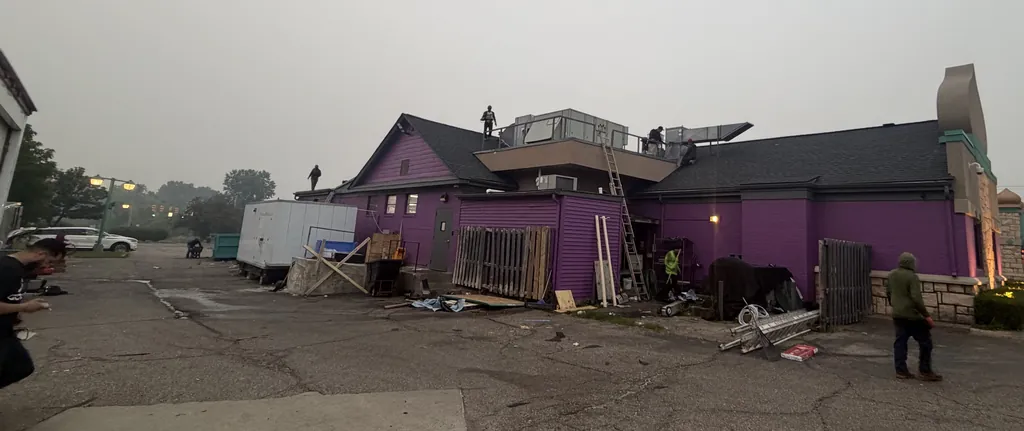
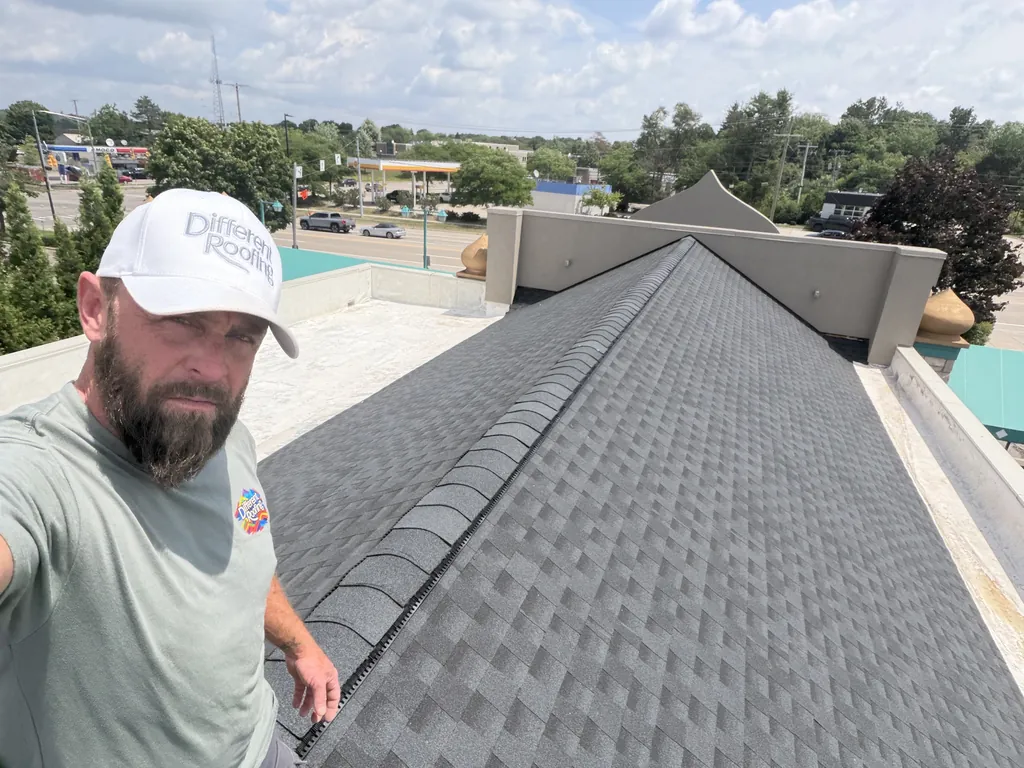
Restaurants also carry a lot of rooftop equipment: exhaust fans, make-up air units, HVAC units, walk-in cooler condensers and gas lines, all with curbs and penetrations that need to stay watertight. Because a restaurant cannot close for a roofing crew, we schedule noisy work and tear-off for before opening, between lunch and dinner, after close or on the slowest day of your week, and we keep debris away from dining patios, entrances and the drive-thru lane. We have replaced a restaurant roof and bring the same approach to every kitchen we work over.
What is the best roof for a restaurant?
For flat restaurant roofs, a grease-resistant membrane such as PVC is usually the best choice, at least around the kitchen exhaust. Pairing it with a grease containment system at the fan keeps oil off the roof and extends the life of whatever membrane is installed.
Can you work on our roof without shutting down the restaurant?
Yes. We plan the loud and messy work for after hours or slow periods, keep walkways and entrances clear, and coordinate with your HVAC and hood service vendors when equipment has to be lifted or disconnected.
Warehouses
Warehouse roofs are big, and that makes small problems expensive. A slow leak over racking can ruin inventory before anyone sees it. Many DFW warehouses have exposed-fastener metal roofs or large single-ply roofs, and we repair, restore, coat and replace both, working around dock schedules and forklift traffic below.
Retail Centers
Strip centers and retail buildings have many tenants under one roof, each with their own HVAC units and their own idea of when a leak is urgent. We document the roof by tenant space, schedule work around store hours, and keep sidewalks, storefronts and parking open for customers.
Offices
Office buildings need a quiet, tidy job. We plan rooftop work so it does not disrupt meetings below, protect lobbies and elevators when materials move through the building, and give the property manager a simple daily update.
Multifamily
Apartment and condo buildings often combine flat roofs over the main building with steep shingle sections, breezeways and carports. We notify residents before work starts, keep tear-off away from parking and pools, and work building by building so residents always know what is next.
Storm and Hail Damage on Commercial Roofs
North Texas sees some of the most frequent hail in the country, and commercial roofs take it head-on. Hail can fracture single-ply membranes, crush the insulation underneath, crack aging asphalt roofs, dent metal panels, ridge caps and edge metal, and damage the fins on rooftop HVAC units. Some of that damage is easy to see; some only shows up when you cut a test core or look closely with the right light. After a storm, we walk the entire roof, photograph and measure the damage, mark it on a roof diagram, and meet the adjuster on site to walk the roof with them. Your adjuster and insurance company decide what is covered. Our job is to make sure the damage is documented clearly and completely.
Commercial Roof Maintenance Programs
Most commercial roof failures start small: a clogged drain, a split seam, a worn sealant joint around a rooftop unit. Our commercial roof maintenance programs put your roof on a schedule, usually twice a year and after major storms. On each visit we clear drains and scuppers, check field seams and flashings, inspect around HVAC units, pipes and curbs, look for ponding water and soft insulation, and touch up coatings and sealant where they have worn. You get a written condition report with photos after every visit, which property managers and HOA boards can use to plan budgets and keep records for owners. If we find something that needs more than routine upkeep, we put it in writing with photos before any work is scheduled. Regular maintenance is the easiest way to reach the long end of a commercial roof’s expected life.
What Building Owners Should Expect
- Free inspection and roof report. Photos, measurements, the existing system and a clear recommendation.
- Written proposal. The scope, the system and the schedule spelled out before work begins.
- A plan for your business. We schedule around business hours, services and events, and agree on where the dumpster, crane or lift and materials will go.
- Safety first. Fall protection on the roof, a controlled work area on the ground, and nothing left loose on the roof overnight.
- Daily cleanup. Debris is cleared daily, and parking lots and walkways are swept with magnets for nails and screws.
- Final walk. We walk the finished roof with you and hand over photos of the work.
Commercial Roofing Service Areas
We serve commercial properties throughout Dallas–Fort Worth, including Dallas, Fort Worth, Arlington, Plano, Frisco, McKinney, Richardson, Carrollton, Lewisville, Denton, Addison and The Colony. Call (682) 400-6163 to schedule a free commercial roof inspection.