Gutter Guards in The Colony, TX
Gutters only work when water can get into them, and gutter guards keep it that way. In North Texas, live oaks drop their leaves in spring, pecans and cedar elms shed in the fall, and storms blow twigs, seed pods and shingle granules onto the roof all year. All of it ends up in the gutters. Once they clog, water spills over the edge and lands right next to the house. Gutter guard installation keeps the debris out so your gutters keep doing their job.
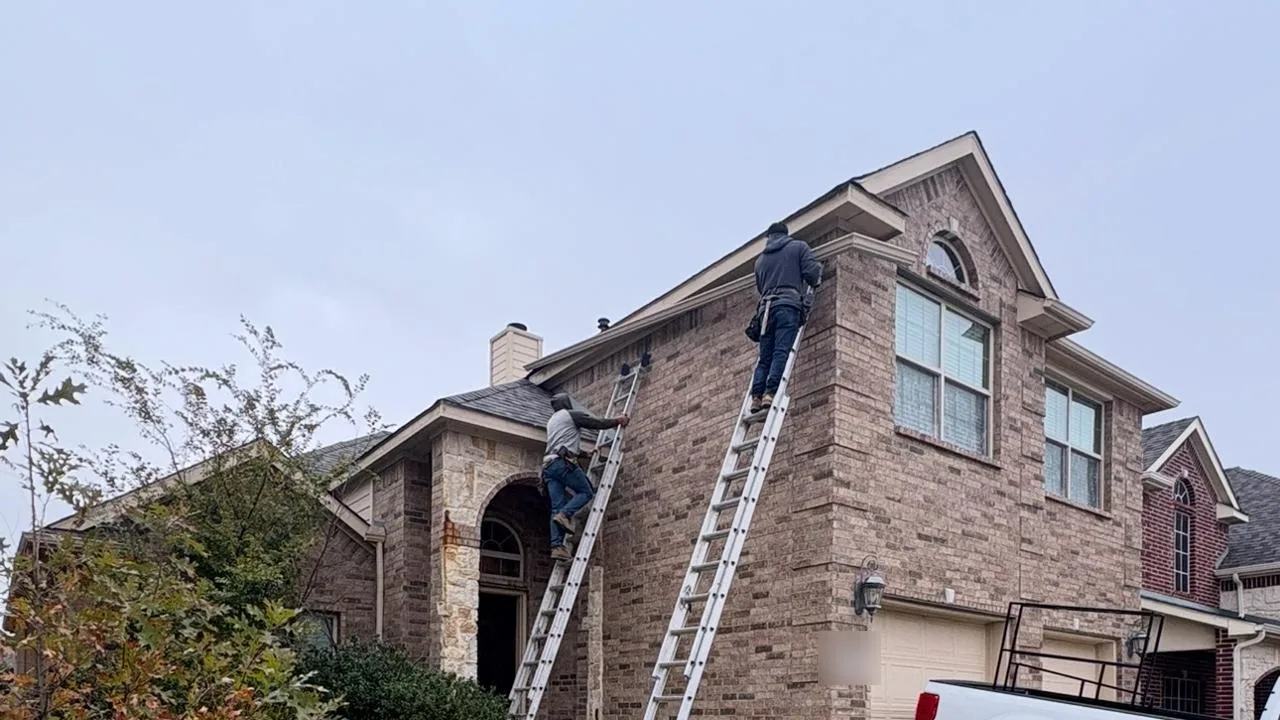
Different Roofing installs gutter guards on new and existing gutters across The Colony and Dallas–Fort Worth. Because we are roofers, we look at how the roof, the gutters and the guards work together, and we make sure the guards fit with your shingles and drip edge.
Types of Gutter Guards
- Micro-mesh guards: a fine stainless steel mesh over a sturdy frame. They block small debris like shingle granules, seed pods and needles, and they take in heavy rain well. For most homes, this is the best all-around choice.
- Screen guards: a perforated metal or plastic screen. They cost less and stop large leaves, but smaller debris can get through or sit on top.
- Reverse-curve guards: a solid cover that curves water around its edge into the gutter while leaves slide off. They work well under big trees but can let water overshoot in very heavy downpours.
- Foam and brush inserts: fill the inside of the gutter. They are simple, but they trap debris over time and have to be pulled out and cleaned.
We recommend a type based on the trees around your home, the pitch of your roof and the condition of your gutters.
Why Gutter Guards Matter in DFW
Clogged gutters cause more than overflow. Standing water and wet debris add weight that pulls gutters away from the fascia, rot the fascia boards and the edge of the roof deck behind them, and give mosquitoes a place to breed. Most important, gutters that overflow dump roof water against the slab. On the expansive clay soil under most DFW homes, uneven moisture next to the house is one of the most common causes of foundation movement. If you are already seeing sticking doors or brick cracks, see our foundation repair page.
We Check the Gutters First
Gutter guards should go on gutters that are in good shape. Before we install them, we check that your gutters slope toward the downspouts, the hangers are tight, the seams are not leaking, and the downspouts are big enough and carry water away from the house. If the gutters are dented from hail, sagging or undersized, it makes more sense to replace them first. See our gutter installation and repair page.
Guards cut down on cleaning, but they do not mean zero maintenance. Leaves and pollen can collect on top of some guards, so it is still smart to look at them once or twice a year, especially after the spring and fall leaf drop.
If your roof is being replaced, that is a good time to add gutter guards, since the crew is already working along the roof edge. Learn more about roof replacement.
Gutter Guard Installation
Gutter guard installation starts with a cleaning. We clear out the leaves, granules and sludge, flush the downspouts, and check every run for slope and leaks. Then the guards are fitted to the gutters and secured so they sit at the right angle under the shingles or along the front lip, depending on the style, without lifting the shingles or blocking the drip edge. We trim the guards around corners and downspout openings so there are no gaps for debris to slip through.
Gutter Covers and Gutter Protection
Gutter covers and gutter guards are two names for the same idea: something that sits over the gutter, lets water in and keeps debris out. Some covers are solid hoods that roll water around a curved edge, while others are screens or fine mesh that water drips through. The best gutter protection for your home depends on what falls on your roof. Homes under large oaks and pecans need a guard that sheds big leaves, while homes near pines or cedars need a fine mesh that stops needles and seed pods. Good gutter protection also keeps your gutters lighter and drier, which helps them stay attached to the fascia and keeps water flowing away from your foundation instead of over the edge.
Micro Mesh Gutter Guards and Leaf Guards
Rain gutter guards come in a lot of names: leaf guard, gutter screen, gutter cover, mesh. What matters is how fine the opening is and how the guard is held in place. Micro mesh gutter guards use a stainless steel mesh fine enough to stop shingle granules and seed pods, stretched over a rigid frame so it does not sag between hangers. For homes under oaks, pecans and cedar elms, a micro mesh guard sheds leaves and still lets a Texas downpour through. A basic leaf guard screen costs less and works under big-leaf trees, but small debris can get past it.
Gutter Guards for Metal Roofs
Gutter guards for metal roofs need a different approach than guards on a shingle roof. Many guards are designed to slide under the first row of shingles, and that is not possible on a metal roof. On metal roofs, we use guards that attach to the front lip of the gutter and the fascia, so the roof panels are never lifted or pierced. Metal roofs also shed water and debris fast, so we make sure the guard sits where the water lands and does not let it overshoot the gutter in a heavy rain.
Different Roofing is Licensed & Insured, open 24 hours, and our team speaks Spanish. Call (682) 400-6163 for gutter guard installation anywhere in DFW.
Call (682) 400-6163 Text usText (682) 400-6163
Areas we serve: The Colony, Frisco, Plano, McKinney, Lewisville, Little Elm, Prosper, Carrollton, Allen, Flower Mound, Denton, Celina, and more North Texas cities.