- Home
- /
- Services
- /
- Commercial Roofing
- /
- TPO Roofing
TPO Roofing in Dallas–Fort Worth, TX
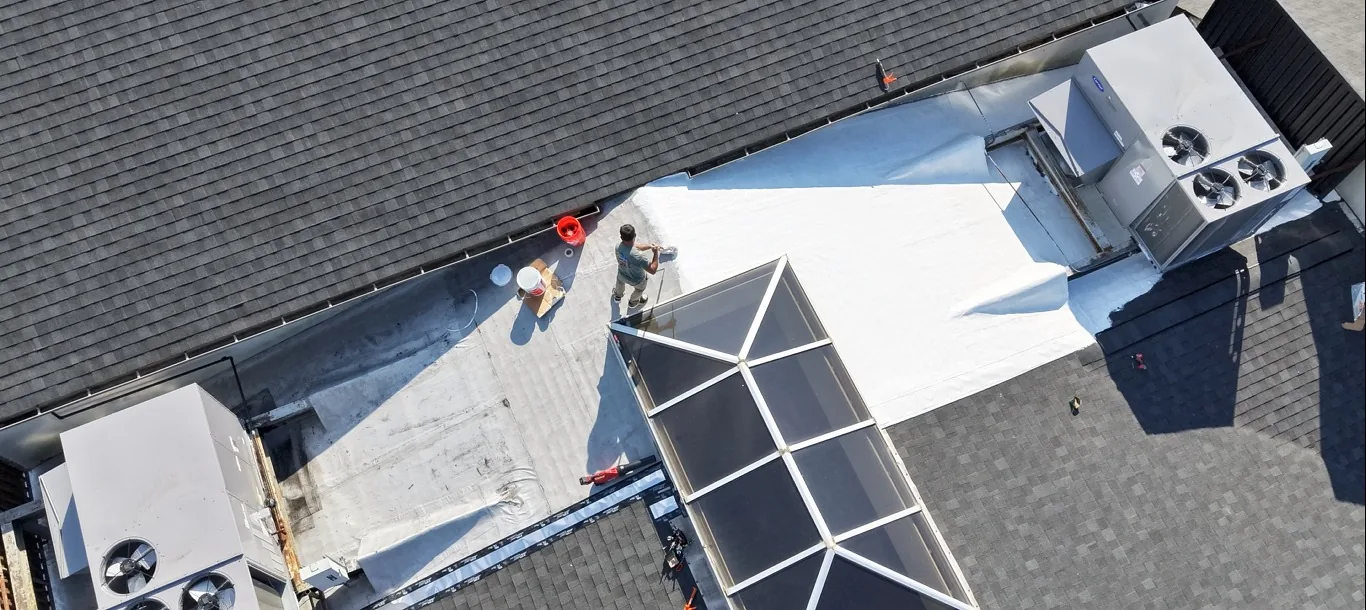
TPO roofing is the white single-ply membrane you see on most new flat roofs around DFW, from strip centers on the tollway to church fellowship halls and office parks. Different Roofing handles TPO roof installation, TPO recovers and TPO roof repair for commercial buildings across Dallas–Fort Worth. We start every job with a free inspection, and we tell you plainly whether your roof needs new TPO, a repair or something else entirely.
Call (682) 400-6163 Text usText (682) 400-6163
What Is a TPO Roof?
TPO stands for thermoplastic polyolefin. It comes in large rolls, usually 10 to 12 feet wide, with a polyester scrim sandwiched inside for strength. The word that matters is thermoplastic: when the edges of two sheets are heated with a hot-air welder, they melt together into one piece. A properly welded TPO seam is stronger than the sheet around it. The white top surface reflects most of the summer sun, which keeps the roof deck cooler and takes some load off the air conditioning through a Texas July and August.
TPO is sold in several thicknesses, most often 45, 60 and 80 mil. Thicker membrane has more material over the scrim to weather away before the reinforcement shows through, so it tends to last longer and shrug off foot traffic better. For most DFW commercial roofs we recommend 60 mil as the starting point and 80 mil where the roof sees heavy service traffic or the owner plans to keep the building for a long time.
How TPO Roof Installation Works
- Inspection and test cores. We measure the roof, count the existing layers, and cut small cores to see whether the insulation underneath is dry.
- Tear-off or recover. If the old roof is wet or there are already two roofs on the building, it comes off down to the deck. If the existing roof is dry and only one layer, a recover over it can save the cost of tear-off.
- Deck repair and insulation. Rusted or rotted deck is replaced. Polyiso insulation goes down next, with tapered panels and crickets where water needs help reaching the drains.
- Cover board. A thin, hard board over the insulation gives the membrane a firm surface and helps it resist hail and foot traffic.
- Membrane attachment. TPO is either mechanically fastened at the seams, fully adhered with bonding adhesive, or attached with induction-welded plates. The choice depends on the deck, wind exposure and the building.
- Welding and probing. Every seam is hot-air welded, then checked with a probe along its full length. Any cold spot is rewelded on the spot.
- Flashings and edge metal. Walls, curbs, pipes, drains and scuppers are flashed with TPO and pre-formed corners, and new edge metal or coping finishes the perimeter.
- Walkway pads and final walk. Pads go down along service paths to the rooftop units, and we walk the finished roof with you.
How Long Does a TPO Roof Last?
A well-installed TPO roof typically lasts about 20 to 30 years. Thickness, heat and maintenance move a roof toward one end of that range or the other. Thin 45 mil membrane on a roof that gets a lot of foot traffic and never has its drains cleaned will wear out first. A 60 or 80 mil roof with good drainage, walkway pads and an inspection every spring and fall will last the longest. Our commercial roof repair and maintenance plans are built around getting a roof to the long end.
TPO Pros and Cons
Pros:
- Heat-welded seams that become one continuous sheet
- White, reflective surface that helps with summer cooling costs
- Lightweight, so it rarely adds meaningful load to the structure
- Usually less expensive than PVC for the same roof
- Can be installed over a dry existing roof in many cases
Cons:
- Seam quality depends on the crew and the welder settings, so workmanship matters a lot
- Can be punctured by dropped tools, debris and careless service techs
- Standard TPO does not hold up well to kitchen grease; restaurant roofs usually call for PVC around the exhaust fans
- Older TPO can become hard to weld to, which limits repair options late in its life
We also install PVC and EPDM as well as modified bitumen and built-up roofs, and we will compare them with TPO for your building before you choose. See the systems list on our commercial roofing page.
TPO Roof Repair
Most TPO roof repair calls trace back to a short list of problems: a seam that was never fully welded and finally let go, a puncture near a rooftop unit, flashing that pulled away from a wall as the membrane shrank, or a hail fracture. On a TPO roof that is still in the middle of its life, the repair is straightforward. We clean the area, prepare the old membrane so the patch can bond, and heat-weld new TPO over the damage, extending the patch well past the damaged area on all sides. On older TPO that will not take a weld anymore, we use compatible primers, tapes and flashing products instead and talk with you about how much life is left.
Repair, Replace or Coat a TPO Roof?
Repair a TPO roof when the damage is limited and the membrane still feels flexible. Consider a silicone coating when the membrane is weathered all over but still attached and dry underneath, because a coating can buy years of life for much less than a new roof. Replace it when the scrim is showing through across large areas, the seams are failing in many places, or the insulation is wet. Wet insulation does not dry out under a membrane; it just keeps rotting the deck and stealing R-value.
Signs of TPO Damage
- Seam edges you can lift with a fingernail
- Fabric threads (the scrim) showing through the white surface
- Cracks or small splits at corners, curbs and pipe boots
- Membrane pulled tight like a drum at walls and edges
- Soft spots underfoot, which can mean wet or crushed insulation
- Ponding water that sits for more than two days
Hail Damage on TPO Roofs
Hail damage on a TPO roof is easy to miss from a ladder. The white surface hides small fractures, and some hits crush the insulation or cover board below without breaking the membrane. After a storm we walk the whole roof, look for star-shaped fractures and impact marks, check the soft spots by hand, and cut test cores where needed to see what is happening below. We also photograph the collateral damage that helps tell the story of the storm: dented edge metal, damaged HVAC fins and hits on vent caps. Then we meet the adjuster on the roof and walk it together. The adjuster decides what is covered; our job is to make sure nothing is left out of the documentation.
What to Expect During a TPO Job
TPO installation is relatively quiet and clean compared with older asphalt roofs. There are no hot kettles, and welding makes very little odor. Fully adhered systems use bonding adhesive, which does have a smell while it cures, so we coordinate with you to shut off or protect rooftop air intakes near the work. Tear-off is the loud part, and we schedule it around your business hours. Each day ends with the roof watertight, the work area secured and the ground swept for fasteners and debris.
More Commercial Roofing Services
TPO is one of several systems we install. Learn about commercial metal roofing, roof coatings and commercial roof repair, or go back to our commercial roofing overview. To schedule a free TPO roof inspection anywhere in Dallas–Fort Worth, call (682) 400-6163.