Patio Cover Ideas for Dallas–Fort Worth Homes
From May through September, an uncovered patio in North Texas is a place you walk across quickly on the way to somewhere cooler. Put a good cover over it and the same slab becomes the room you use most: morning coffee, weeknight dinners, the kids' birthday party when it is 98 degrees. We build covered patios all over DFW, and homeowners usually ask the same question first: what should mine look like?
Here are the patio cover ideas we see work best on Dallas–Fort Worth homes, with examples from jobs we have built, plus what to think about before you pick one.
1. Match the House Roof
The most popular choice is a cover that looks like it was built with the house: a gable or hip roof that ties into the existing roofline, finished with the same shingles. From the street and the backyard, it reads as part of the home instead of an add-on. On Lancashire Lane in Prosper, we built a shingle-roof patio cover on cedar posts over a concrete patio, with the shingles matched to the house.
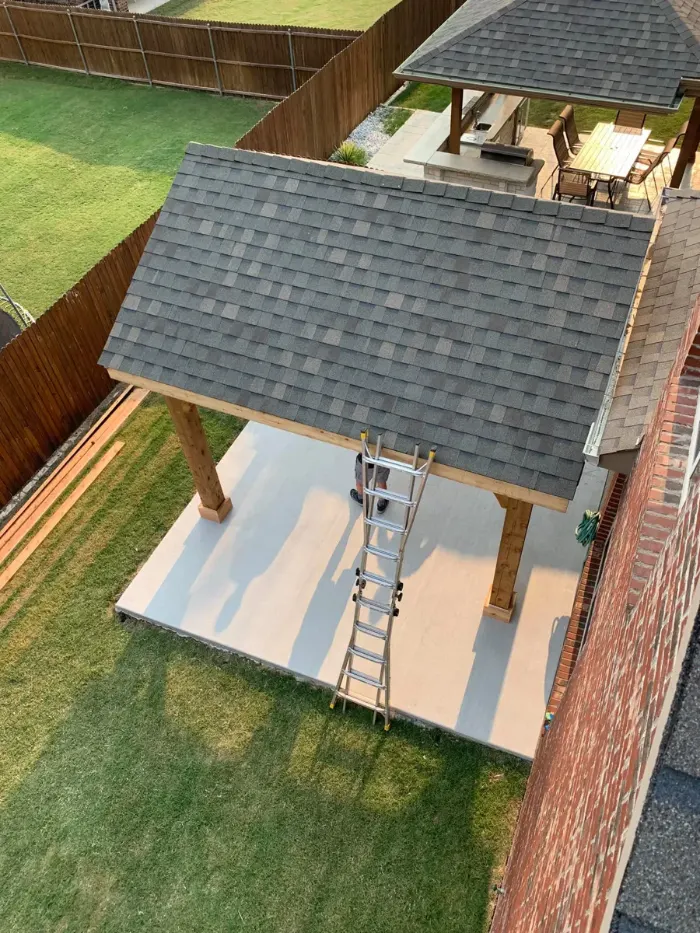
The detail that matters most is where the cover meets the house. That joint has to be flashed and sloped so water runs off the cover, not back toward the wall. It is roofing work, which is a big reason homeowners hire a roofer for it.
2. A Simple Shed-Style Cover
A shed-style (or lean-to) cover has a single slope that runs down and away from the house. It is the simplest roof shape and fits well under second-story windows, where a gable would not have room. The thing to watch is pitch: a cover built too flat holds water during a heavy North Texas downpour. Done right, a shed roof is clean, affordable to build and easy to maintain.
3. Natural Cedar with Black Steel Brackets
Cedar posts and beams with black steel brackets give a patio a warm, ranch-style look that works on brick homes all over DFW. On South Paloma Creek Boulevard in Little Elm, we built a cedar cover with a center post and black brackets, and on Standridge Drive in The Colony, a long cedar cover runs the full width of the back of the house, over a flagstone patio.
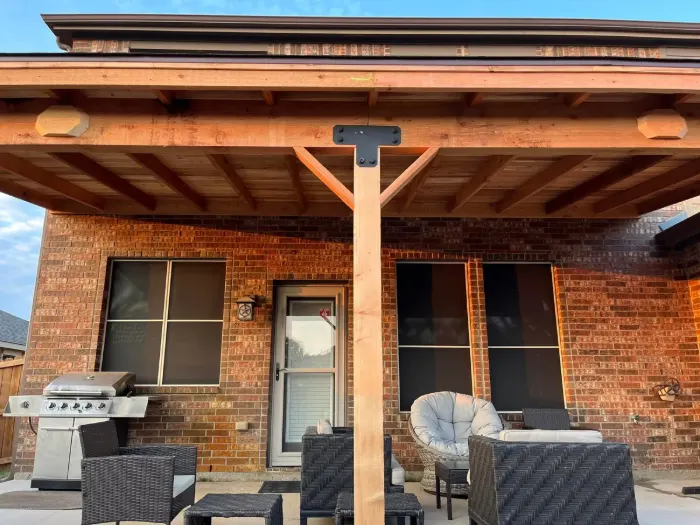
Cedar can be left to weather naturally or stained to keep its color. A stain also helps it stand up to the summer sun.
4. A Painted Cover That Matches the Trim
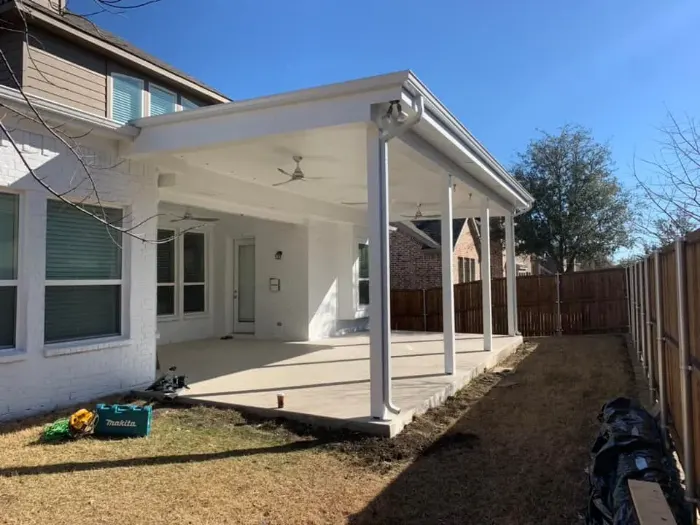
If natural wood is not your style, a cover painted to match your trim looks crisp and built-in. On Lady of the Lake Boulevard in Lewisville, we built a white painted cover with a finished ceiling over a long concrete patio. Against light brick or siding, a white cover also keeps the space feeling bright even in full shade.
5. Ceiling Fans and Recessed Lights
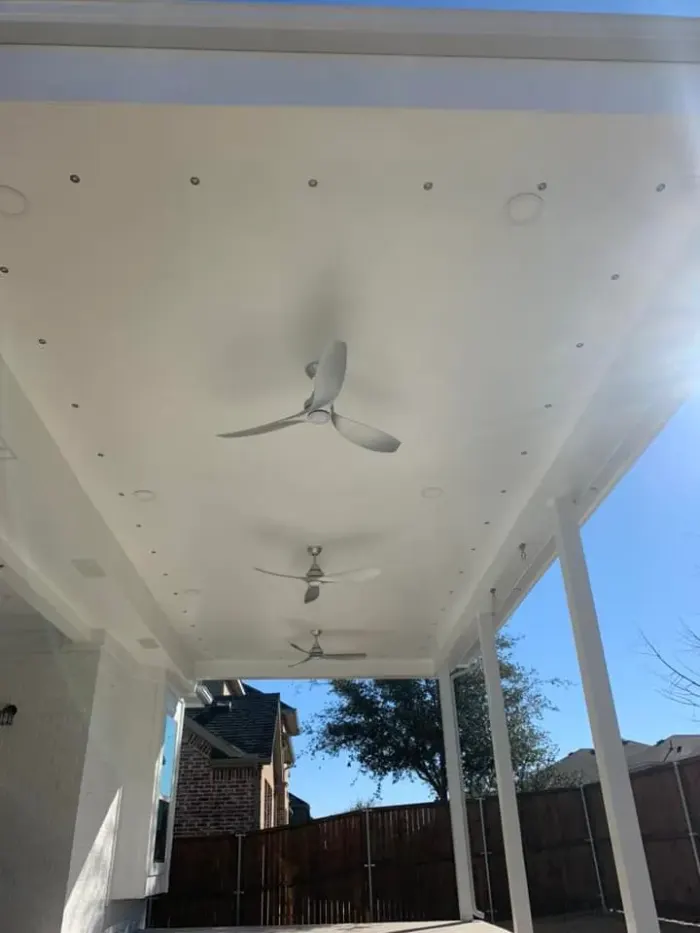
If you only add one thing to a patio cover, make it a ceiling fan. Moving air makes a bigger difference on a humid August evening than almost anything else. Recessed lights turn the patio into a place you can use after dark without a bright bulb in your eyes. The Lewisville cover above has both.
6. A Metal Roof Patio Cover
Metal roof panels give a cover a clean, modern look and suit homes that already have a metal roof or metal accents. Metal sheds rain quickly and holds up well in the heat. We install metal roofs on homes and buildings, so we can match the look on a patio cover.
7. Add a Pergola Beyond the Cover
You do not have to choose one or the other. A solid cover by the back door keeps the table and grill dry, and a pergola farther out gives a lighter, open-air spot for a fire pit or lounge chairs. Together they make the backyard feel like two rooms.
8. Upgrade the Patio Under the Cover
A cover is a good time to fix a patio that is too small. Many builder patios barely fit a table. We can pour a larger concrete patio or build a paver or flagstone patio before the cover goes up. The Standridge Drive job in The Colony mixes both: flagstone under the cover for the seating area, and a new concrete patio alongside it.
9. Put Gutters on the Cover
A patio cover adds roof area, and all the rain it catches comes off one edge. Without a gutter, that water lands in a line along your yard or splashes back onto the patio. A gutter with a downspout aimed away from the house keeps the patio dry and the water away from your foundation.
Planning Tips for DFW Weather
- Know where the sun hits. West- and south-facing patios get the hardest afternoon sun and benefit most from a solid cover.
- Plan for hail. A shingled cover can use the same shingles as your house, including Class 4 impact-resistant shingles if that is what you have on the main roof.
- Plan for wind. Posts, beams and brackets need to be sized and fastened for spring storms, not just for how they look.
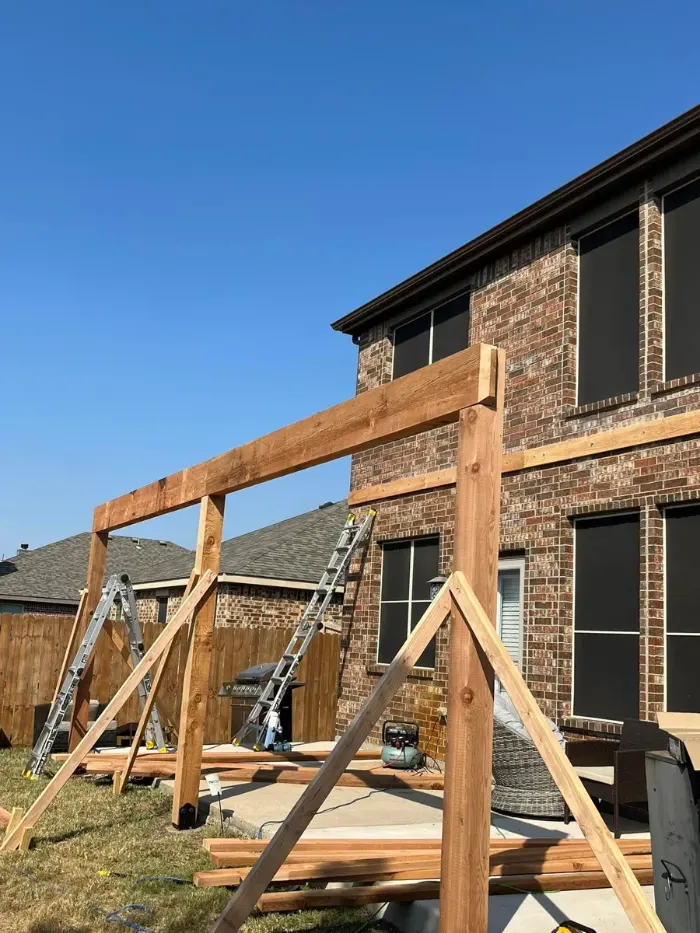
- Respect the clay. North Texas soil moves as it wets and dries, so post footings should be planned for it. The cedar framing on Ranchview Drive in Coppell shows the posts and beams that carry the whole roof.
- Check with your HOA. Many HOAs require approval for a patio cover. We follow HOA rules and can give you the plans and details for your request.
See Your Options in Person
The best way to choose is to stand on your patio with someone who builds covers and look at the roofline, the sun and the space. We will walk you through what fits your home and give you a free written estimate. Learn more on our patio covers and patio installation pages. Financing is available, and se habla español.
Call (682) 400-6163 to set up your free estimate.